

The USA on a motorcycle; is it safe?



If you’ve already been there and done that, then you’ll have your own opinion; there’s not much I can add. But if you haven’t been over, and you’re thinking about it, I recommend a new book by Eva Strehler, Once Upon a Bike.
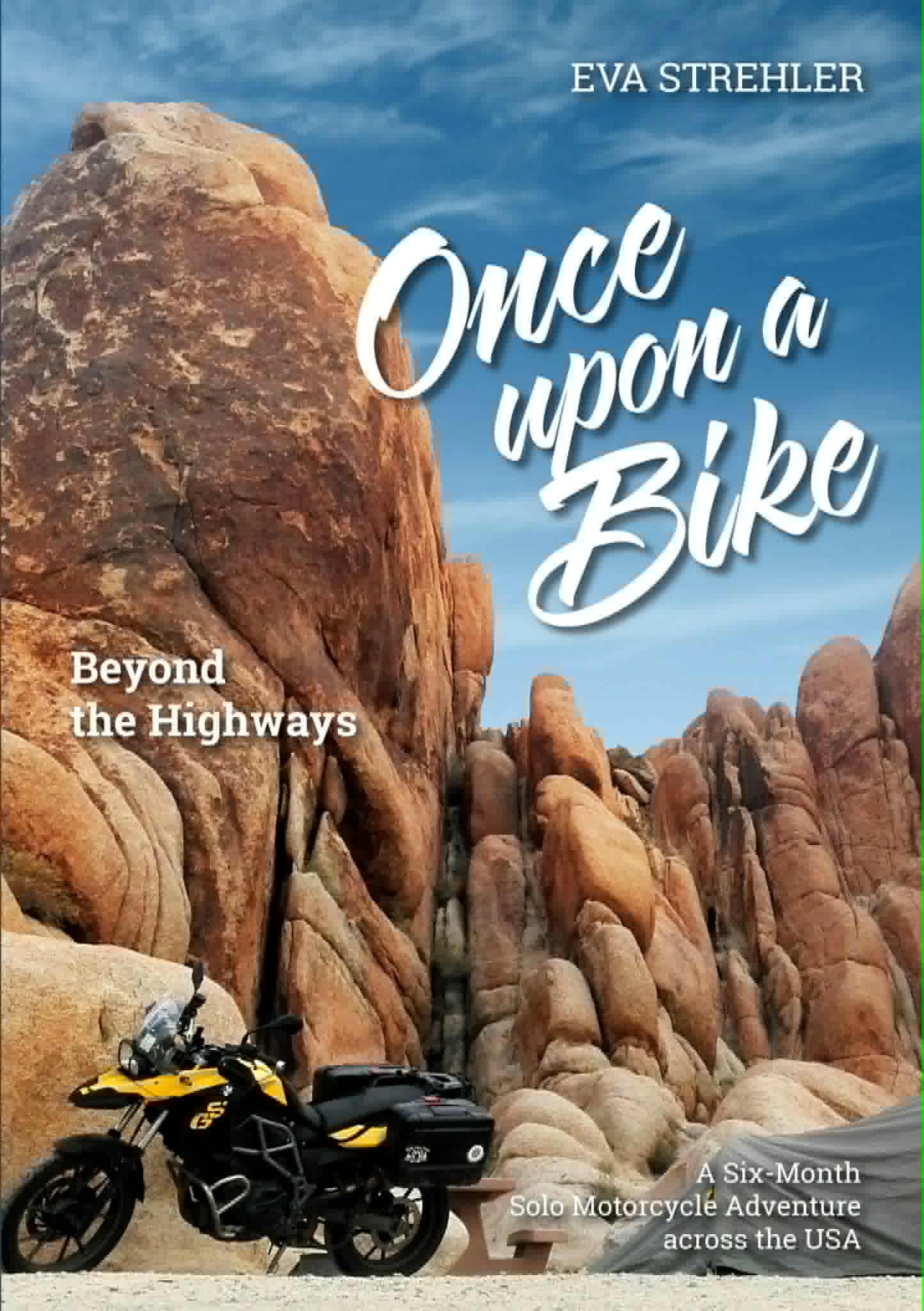
It’s not a guidebook, you can get those. It’s a motorcycle adventure story, covering a long ride in the USA. She starts from Bremerhaven in Germany where she loads her BMW F650GS onto a ship and she sails across to Baltimore. From there she rides up one side, across the top, down the other side, across the middle, and back to the starting point.
Firstly, I’d like to say hooray! Eva’s a welcome new addition to the gang of motorcycle adventure riders. Her book is detailed, entertaining and a great read. She does her homework on places. I’m in favour of that – much better than zooming through and learning nothing. She herself is good company: competent, brave, determined, and a little bit crazy. This is not a fault. Every long-distance rider is slightly off-balance. If they were normal, they’d stay at home, and there would be no stories to tell. Also, oddness takes you to the edge. It’s how we learn where the edge is.
Anyway, back to my first question. Is the USA safe?Thinking about it, it’s a strange question to ask. It’s a wealthy and sophisticated country. Get off the plane, and your mobile phone will carry on working. Your credit card will get you ‘gas’, food, a room, and dollars from a cash machine. They speak English. They have a healthcare system – just buy some insurance like a sensible person. The roads are in good repair and well signposted. Safety standards are high. You won’t find bare wires in the hotel electrics; you’re unlikely to get food poisoning in a restaurant, or blood poisoning in a hospital. Or typhoid, or malaria. That sort of thing is not allowed. They have rules, laws, and inspections. (And by the way, you’re three times more likely to get your bike stolen in the UK, compared with the USA*).
But it’s clear that a lot of bike tourists – Brits and Europeans – have got it into their heads that the USA is too risky for solo riders. That’s why there are so many organised tours. I blame Hollywood. The studios sell us glamour, but they also sell us drama. In drama, things go wrong; otherwise, there’s no story. So the movies hold a mirror up to American life, but it’s a dark, distorting mirror.
We’ve all seen Easy Rider. I had the poster on my wall before I had a bike. We love the cool-looking ‘sickles, and the long straight roads. But we all remember the ending. If it’s not Easy Rider, it’s Thelma and Louise, Three Billboards Outside Ebbing, or on a bad day, Deliverance or The Texas Chainsaw Massacre. As soon as you’re out in the boondocks, something bad is bound to happen.
An example: two years, ago, my partner Julia and I were riding our bikes past Folsom, Louisiana, and I saw a sign saying DO NOT STOP FOR HITCH-HIKERS.
Me (over the intercom): “Brilliant! I’ve got to photograph this!”
Julia: “The hell you are. We’re not stopping. Read the bloody sign.”
And that, folks, is why I don’t have a photo of that DO NOT STOP sign. Julia was expecting a desperado in an orange suit to leap out of the ditch. She didn’t want to get involved, even if it was George Clooney, or Tim Robbins. Just no. Ride on.
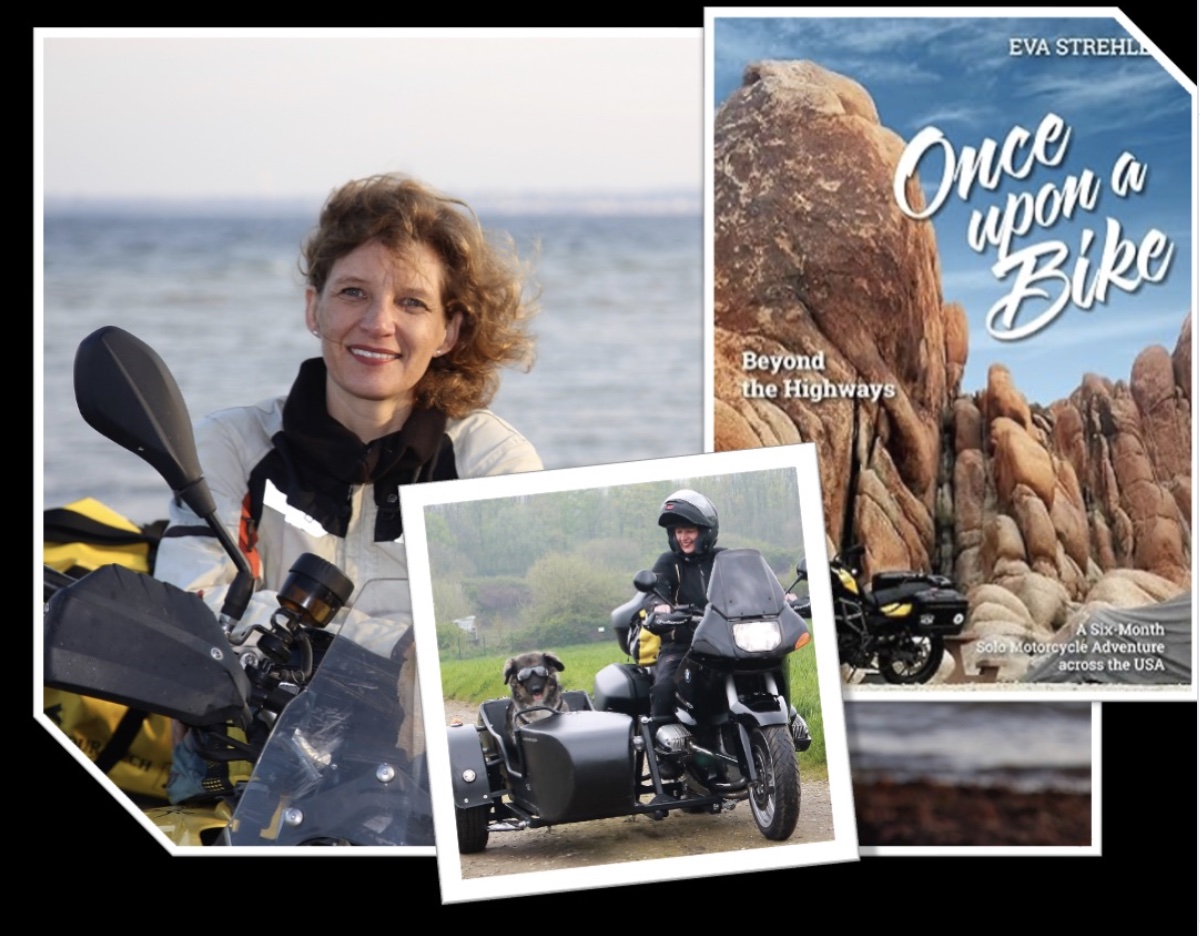
Anyway back to Eva’s book, and safety in the USA. Although this is her first book, Eva’s not new to bike touring. She’s had adventures in the Carpathians and she’s been across Iran with a sidecar outfit and a dog. However, she’s a new visitor to the USA. And, judging by her story, she went there free from the fears that the rest of us suffer from: the fear of alligators, bears, snakes, gangsters, trigger-happy maniacs, serial killers and scary cops.
For instance: wild camping. On her first night on the road, I was taken aback to read that her technique for finding a place to stay was to turn off the road, go down a track, find a swampy pond, and just throw herself on the ground next to it. No idea who owned the land, no campsite, and no tent. I thought: “Is this a German thing?”. The following morning she was covered with mosquito bites, including one that almost closed an eye. Despite that, she resolved to repeat this plan whenever possible. I found myself muttering: “Was that wise?”
Eva doesn’t spend all her time camping; she likes motels too. But it depends on her budget. She’s not a great financial planner and she admits as much. She has a part-time job back in Germany and the salary reaches the bank account at the end of the month. So she might stay in motels for a week or so, but as the funds get low, she goes wild camping again.
Generally speaking, Wild Camping is something that adventure riders do in the wilderness. Off the road, into the woods, pitch a tent. An innovation that Eva seems to have developed, is Town Centre Wild Camping. The tent goes up on a patch of grass round the back of the library. Or next to the fire station. Other camping strategies include trying to get into the storeroom of a church; wandering through a hospital looking for an empty ward; or sleeping next to the bins, round the back of a gas station.
“Aha”, you will say, “isn’t there a sector of American society already occupying that space?” You’re right: the truly homeless. People reduced to that condition by economic failure, mental illness, and drug dependency. But under the road dirt, Eva’s still a tourist: a professional person with a regular income, a decent BMW, and a return ticket. I confess I found this slightly queasy, on ethical grounds.
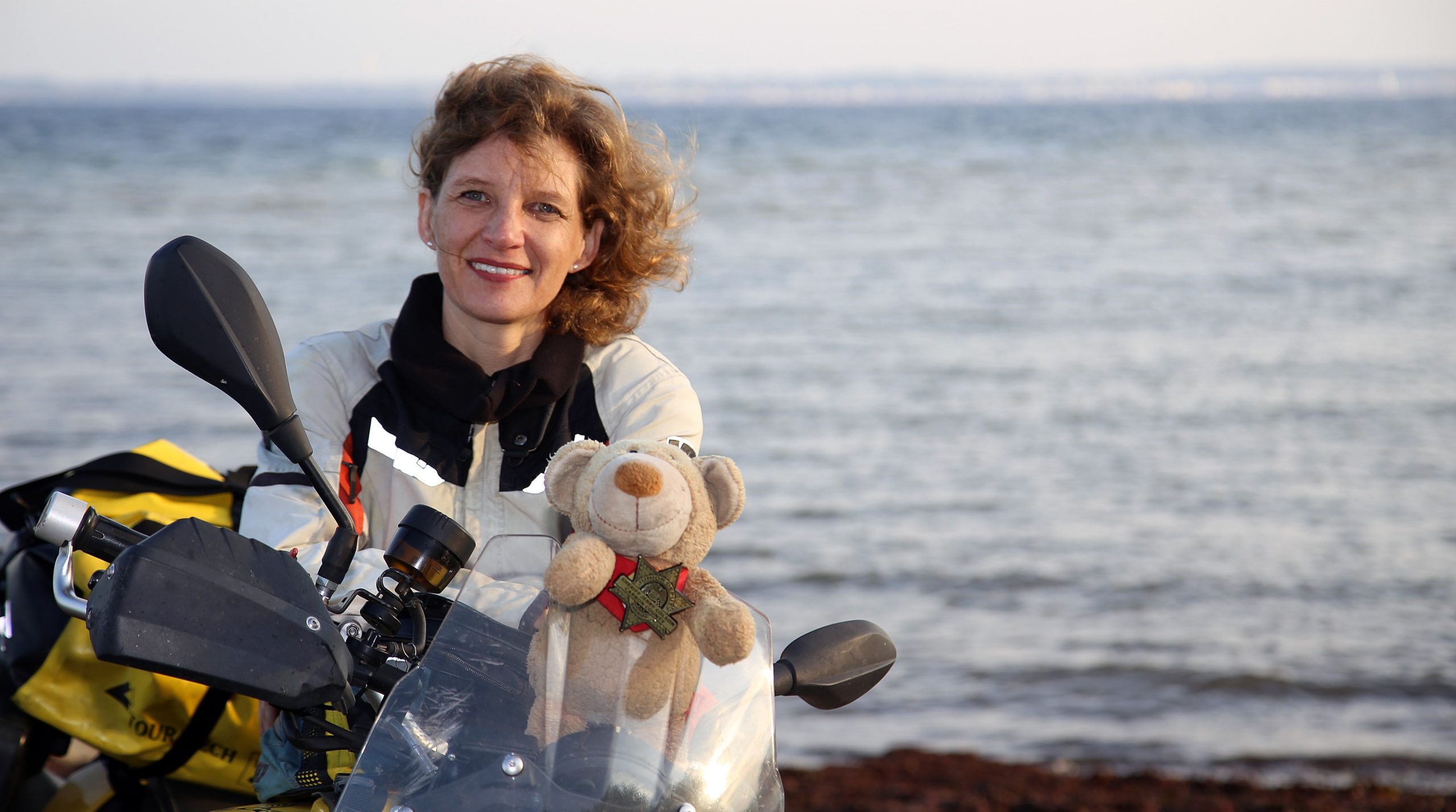
The effect is also comic. Some mornings, she rises from her unofficial campsite with wild hair, red-rimmed eyes and muddy gear. To you and me, that’s just normal for long-distance bikers. But if the bike and helmet are out of sight, the general public often mistake her for a homeless person – possibly someone with mental health problems. It’s to the credit of small-town Americans that this creates sympathy, rather than scorn.
On one occasion she sits at the back of a church: at the end of the service, she steps forward to ask about somewhere to stay. The visiting preacher has just been paid in cash, from the collection; so he steps forward in Christian generosity, peels a large bill from his roll and hands it to her: enough to get her into a decent hotel, and maybe turn her life around. To her credit, Eva is embarrassed. She thinks about giving the money back. But she can’t: it’s insulting. So it has to go into the kitty.
Some nights, she’ll find an empty house and move in for the night. If the house is locked up, she might just camp on the lawn. On one occasion, having set up her tent, she found out that the owners were in the house after all. So how do the house owners react? She’s invited into the house to sleep in the spare room. I must admit, as an English person, I might react less well to someone parking a BMW on my lawn, and pitching a tent, without an invitation.
We have this idea that Americans will shoot you for camping in their garden without permission. They’d call it a House Invasion, and no jury would convict. But it turns out that, throughout this journey, they’re much nicer than us.
Once, to my alarm, she goes round a parking lot, trying door handles, finds an unlocked truck, and moves herself into the sleeping compartment. What if the driver came back late, from a bar, to find her asleep in his truck? Would he be annoyed? Worse still, would he be delighted? Fortunately, she gets the bed to herself.
Just as jaw-dropping was Eva’s strategy of finding a small-town bar, and then asking, near closing time, if anyone knows a cheap place where she can spend the night. She’s a single woman, blonde, travelling alone. What could go wrong? And yet it always worked out. She constantly met people who were kind, generous, helpful and sane; even the policemen.
Eva’s book is a gripping read, but I have to say, if you’re a beginner, looking for an example of how to go long-distance touring, please don’t do it this way. Don’t sleep next to the bins at the back of a gas station. Don’t ask, at closing time in a rough bar, if anyone can offer you a bed for the night. Don’t accept the offer of a room from a passing millionaire in a sports car. Don’t have a bike that you can’t pick up, then go off-road on a track that no-one uses. Don’t ride on bald tyres. Taking massive chances works for some people; but luck can only go so far.
Although Eva is the heroine of her story, she has a great supporting cast: ordinary Americans. She talks to loads of them, and records their comments in detail and with sympathy. Some are sad, but none of them are nasty. Even the customs officers aren’t that bad. The police are extraordinarily helpful to a passing traveller; they go above and beyond.
Which brings us back to our starting point: is it safe to tour the USA on a motorcycle? Eva tests the outer edges of what might be safe, far past conventional wisdom, but she can always rely on the kindness of strangers. The Americans that Eva meets are interesting, straightforward, generous, caring and intelligent. Not boastful, cruel, unreliable and rude. Why is this a surprise? What happened to give the world such a false impression? I think I’d better leave it there.
Andy Tribble
* UK bike theft rate: for every 1000 bikes registered, between 20 and 22 are stolen every year. US rate: 6.4 per 1000. So that’s slightly more than 3:1.
